
 EXCLUSIVE OFFERS



Givaudan Bisabolene
Price range: 99.00AED through 5,995.00AED Including VAT
Givaudan – One of the largest and most highly respected fragrance companies in the world


Free Shipping in UAE over 200aed via Aramex
Worldwide Shipping via DHL Express
Est Delivery UAE 2-3 Business Days & Worldwide 1-2 week
Free samples for orders above 200aed
Terms & Conditions apply*
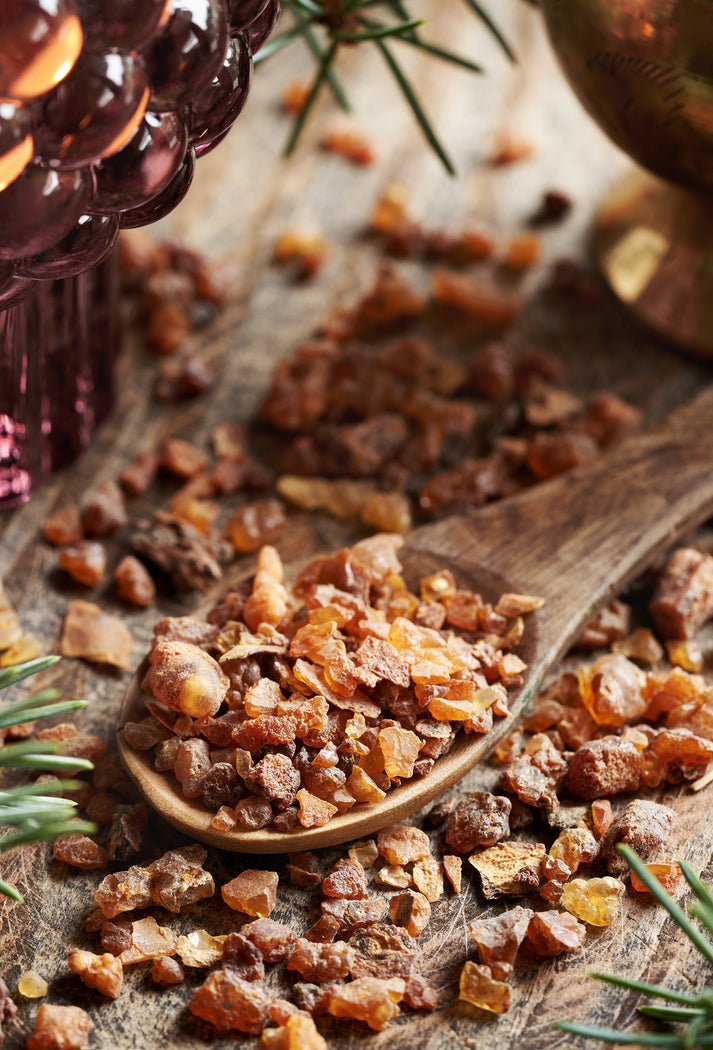
Bisabolene has a warm, sweet-spicy-balsamic odour very typical of opoponax and ‘oriental’ fragrance types. It finds use in reconstitutions of oils of bergamot, myrrh and lemon, and is an excellent fixative for neroli bases.

| Use level | 1% – 5% |
| Tenacity on blotter | 5 days |
| Burning effectiveness | ★★★ |
| Substantivity damp | ★ |
| Substantivity dry | ★ |
| Bloom in soap | ★ |
| pH | Base | Odour |
|---|---|---|
| 2 | Acid cleaner | ★ |
| 3 | Fabric conditioner | ★★★ |
| 3.5 | Antiperspirant | ★★★ |
| 6 | Shampoo | ★★★★★ |
| 9 | APC | ★★★ |
| 9 | Fabric detergent liquid | ★★★ |
| 10 | Soap | ★★★ |
| 10.5 | Powder detergent | ★★★ |
| 11 | Liquid bleach | ★ |
Click on the property name for further details
| Property | Rating |
|---|---|
|
Renewable carbonRenewable carbonRenewable carbon comes from natural sources that can be replenished in a shorttime frame, e.g. plants, bio-mass, or from recycling.The renewable carbon of an ingredient is assessed based on the chemical and/or biological process(es) used to make the ingredient and the origin of the starting raw materials that in some way form part of the ingredient’s carbon skeleton. The number of carbon atoms that are from a natural origin (e.g. botanical) is expressed as a percentage of the total number of carbon atoms in the ingredient molecule. Givaudan defines naturally derived substances as those composed of >50% renewable carbon. This is line with ISO 16128-1.Dilutions: calculated based on data for the individual ingredient and solvent. It is the sum of the relative concentration of an ingredient and solvent multiplied by their corresponding renewable carbon content. This is in line with ISO 16128-2. |
≤50% renewable carbon |
|
BiodegradabilityBiodegradabilityThis is the breakdown of organic matter by micro-organisms, such as bacteria and fungi. Key removal process of organic chemicals in the environment.Biodegradation is determined according to OECD test method guidelines. A readily biodegradable material has achieved >60% in a ready biodegradation test within 28 days and passing the 10 day window criterion following OECD 301, 310 and equivalent ISO guidelines. An inherently biodegradable material has achieved >60% in a ready biodegradation test within 28 days but failed the 10 day window or has achieved >60% in a ready test that has been extended beyond 28 days or has achieved >70% in an inherent biodegradability test e.g. OECD 302C test.Dilutions: assessed based on data for the individual ingredient and solvent, applying the worst case. |
Inherently biodegradable |
|
EcotoxicityEcotoxicityThis is a measure of the intrinsic toxicity of the ingredient to aquatic species.Internationally recognised testing guidelines (e.g. OECD) were applied, performed to Good Laboratory Practice standards. Our materials have been classified as non- hazardous, harmful (Acute 2, 3, Chronic 3, 4), or toxic (Acute 1, Chronic 1, 2). The environmental hazard categories (Acute 1, 2, and Chronic 1, 2, 3, 4) are based on the Globally Harmonized System of Classification (GHS).Dilutions: evaluated as pure material. |
Toxic |
|
WasteWasteThis indicates the amount of waste generated while manufacturing the ingredient.This is a comparison between the Process Mass Intensity (PMI) of the ingredient and the expected value for a product of a similar tonnage. (Process Mass Intensity is the total mass of materials needed to make a set quantity of product). This assessment is based solely on activity that takes place within Givaudan (suppliers and contractors are not covered).Dilutions: evaluated as diluted material. |
Exceeds expectations |
|
ChemistryChemistryThis determines if the process uses chemistry that is environmentally disfavoured.A list of disfavoured chemistries was prepared based on ISO 16128 and customer feedback. This parameter indicates if any of the chemistry used to make the ingredient is on this list: short chain alkyl halides or alkyl sulphates (<5 carbons), isocyanates, nitration, alkyl chlorination, sulphonation, silylation, ethylene oxide, phosphorous oxychloride, or stoichiometric transition metals. This assessment is based solely on activity that takes place within Givaudan (suppliers and contractors are not covered). |
Not on the disfavoured list |
|
Solvents usedSolvents used This is an assessment of the environmental impact of the solvents used in the process.Solvents are categorized as either favoured, standard or disfavoured. Favoured solvents are listed in the ISO 16128 standard. Disfavoured solvents are those requiring Authorisation under REACH (or going through the process to be Authorised). If a solvent does not fall into either category, it is treated as “standard”. The category is determined by the least favoured solvent used in the process. This assessment is based solely on activity that takes place within Givaudan (suppliers and contractors are not covered).Dilutions: evaluated as diluted material. |
Standard solvents |
|
Process complexityProcess complexityThis measures the number of steps in the chemical process.A simple process has 1 chemical step, standard process has 2-3 chemical steps and a complex process 4 or more. This assessment is based solely on activity that takes place within Givaudan (suppliers and contractors are not covered).Dilutions: evaluated as pure material. |
Simple |
|
Olfactive impactOlfactive impactThis is based on odour value as measured by Givaudan as a combination of Odour Detection Threshold and Vapour Pressure.Dilutions: evaluated as pure material. |
Impactful |
|
Social responsibilityThis refers to the SMETA or equivalent protocol for our manufacturing sites.The SMETA methodology assesses a manufacturing site based on leading international standards around labour, health and safety, environment and business ethics aspects. To demonstrate our efforts and progress on these conventions and principles, we participate in Supplier Ethical Data Exchange (Sedex) forum and follow its Sedex Members Ethical Trade Audit (SMETA) assessment programme which has been in place at Givaudan since 2008. |
Manufacturer – Givaudan – One of the largest and most highly respected fragrance companies in the world. Please note we are strictly an unofficial reseller of this product and we are not affiliated with the manufacturer.
Disclaimer
For Trade Use Only
Our products are intended as building blocks in the perfume creation process; they are not to be applied to the skin undiluted.
These raw materials are for use by the perfumery trade only.
| Weight | 5g, 10g, 15g, 25g, 50g, 100g, 250g, 500g, 1000g |
|---|
Be the first to review “Givaudan Bisabolene”
You must be logged in to post a review.
Related products



Reviews
There are no reviews yet.